Joint width
Together with the expected movement, determines the required deformation capacity of the seal.
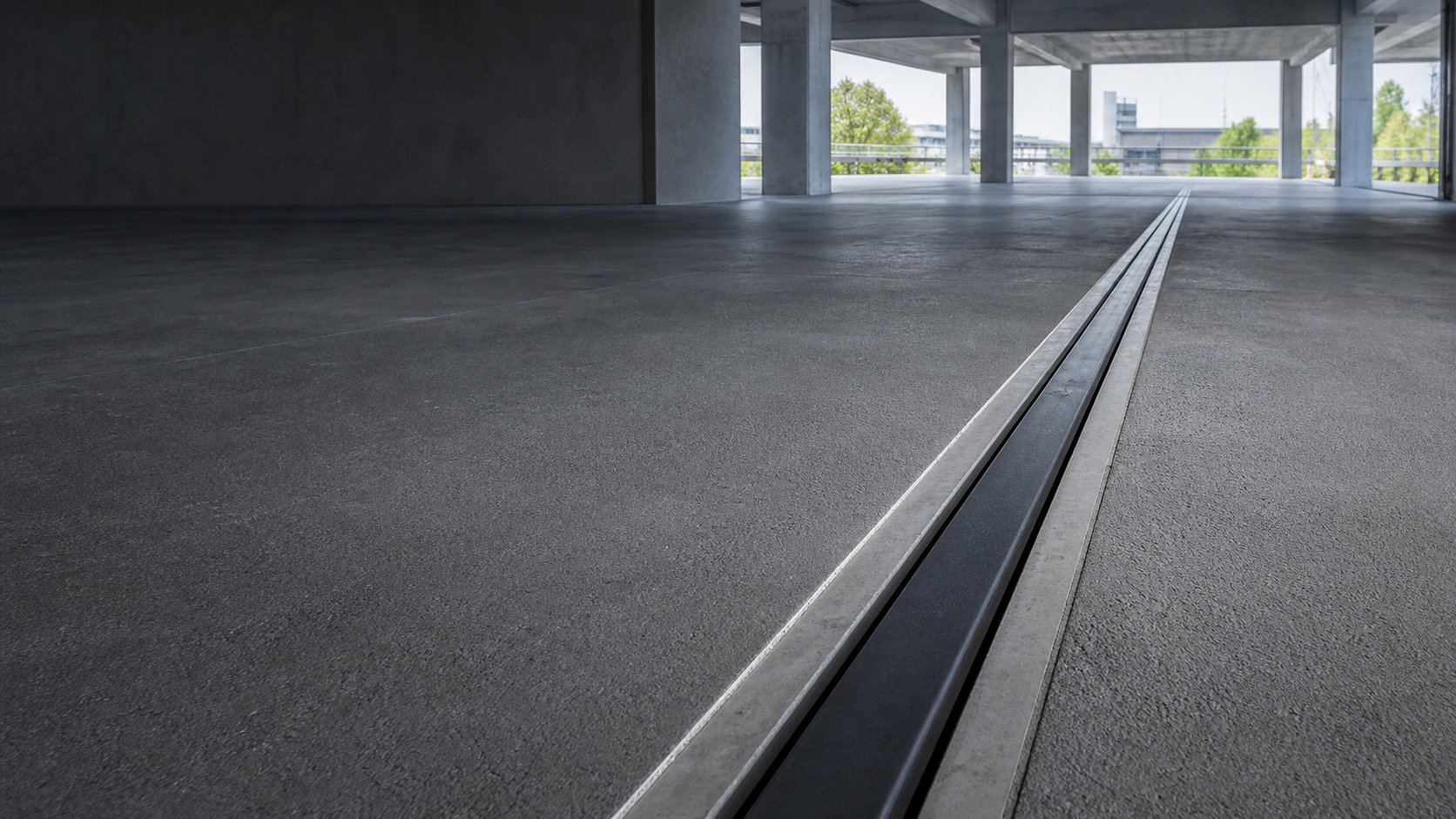
PolyShield Joints
Technical joint and seam sealing for industrial floors, parking decks, concrete structures and building connections. Dimensioned for actual movement, geometry, adhesion and usage load.
The joint as a technical detail
A durable seal must be able to deform without coming loose from the flanks. This requires an appropriate ratio between width and depth, correct backing, reliable adhesion and a material that is suitable for water, traffic, chemistry, temperature and maintenance.
The choice of system starts with the function of the joint.Not with the tube that happens to be available.
AREAS OF APPLICATION
That is why each joint type has its own assessment and detail route.
Joints that must accommodate thermal, structural or dynamic movement without loss of adhesion or uncontrolled tension.
View application ↗02Traffic · wear and tear · continuityRepair and sealing of seams in production, logistics and traffic zones, tailored to wheel load, cleaning and downtime.
View application ↗03Water · transition · adhesionTransitions between floor, wall, curb or material type where waterproofing and movement come together in one detail.
View application ↗04Climate · connection · maintenanceWeather-loaded connections around panels, frames and structural parts, assessed for movement, aging and accessibility.
View application ↗Functional joint structure
The section below shows the functional principles. Actual dimensions and material selection follow from the project recording.
View our quality approach →Sizing framework
Together with the expected movement, determines the required deformation capacity of the seal.
A controlled depth prevents an unfavorable form factor and unnecessary tension in the material.
Controls the depth, prevents three-point adhesion and supports an even sealing profile.
Must be load-bearing, clean, dry and suitably prepared for reliable adhesion.
Thermal, structural or dynamic — the direction, frequency and magnitude must be determined in advance.
Water, traffic, chemicals, UV, cleaning and temperature determine the suitable system family.
Common causes of failure
Adhesion to both flanks and the bottom prevents free deformation and concentrates stress.
A profile that is too deep, too shallow or uneven changes the deformation and stresses the flank bond.
Dust, oil, old sealant residue or moisture block reliable adhesion, even with a good product.
A seal can only function when the expected movement remains within its capacity.
Hard wheels, concentrated loads and edge impact sometimes require flank repair or a different joint concept.
Primer, existing sealant, coating and cleaning agents must be mutually compatible.
Controlled from recording to release
Suitable for a separate jointing project or as a specialist part of a larger renovation.
Record function, location, length, accessibility, damage picture and operating conditions.
Assess width, depth, flank condition, movement, moisture and existing materials.
Determine preparation, backing, primer, geometry and sealing material project-specifically.
Remove existing material, repair flanks and test adhesion in advance where necessary.
Apply backing, primer and sealant within the correct application window.
Record profile, adhesion, finish, residual points and maintenance advice.
Business project scope
PolyShield Joints is intended for projects where continuity, watertightness, hygiene or mechanical stress are demonstrably important. We can inventory, classify and phase joints so that implementation fits in with maintenance windows and business processes.
Clear boundaries
Cracks or flank damage with a constructive cause must first be assessed by the responsible specialist.
A leaking joint under water pressure may require an injection, drainage or specialized joint profile.
Cleaning agents, oils and process chemicals must be known before material selection.
A joint that is too narrow, irregular or damaged first requires repair, widening or an alternative detail.
Document your joint request technically
Share location, joint type, damage picture, overall length, usage load and desired planning. We indicate what information is still required and whether a recording, trial or targeted quotation is the logical next step.